Dolphins in Slovenia: why we love them and where to see them
Ask our guests what they hope to see on the water and one answer comes up more often than any other: dolphins. Adults lean over the rail just as eagerly as the children. So why do dolphins move us so much, and is there really a chance of meeting them off Izola? Here is what we tell our guests.
Why we love dolphins so much
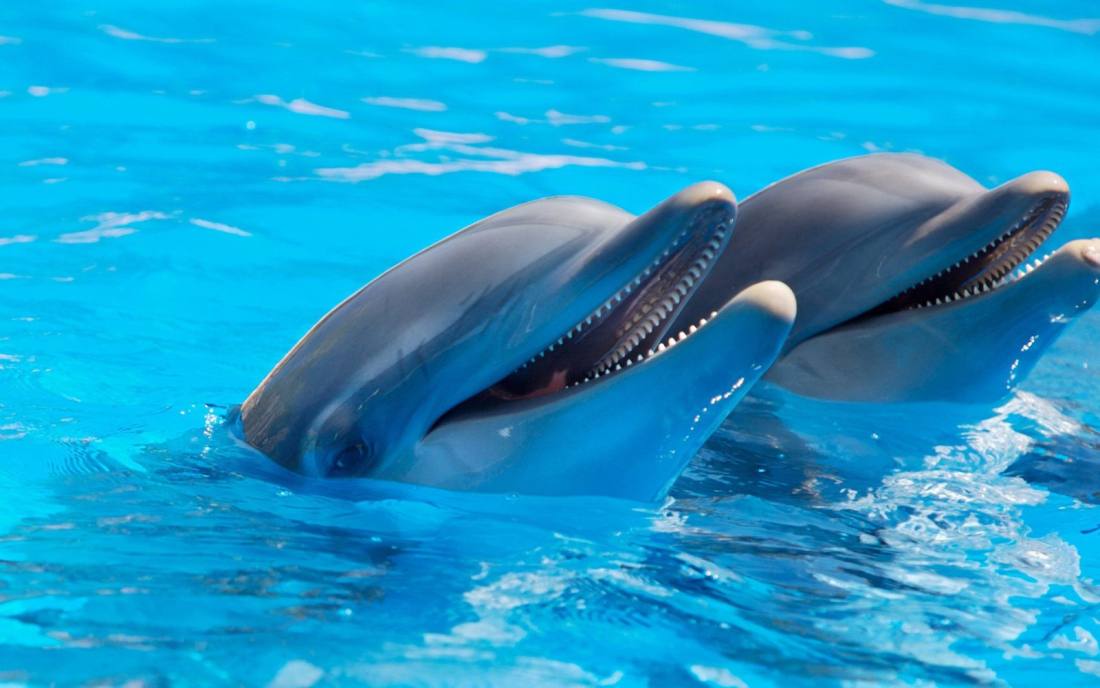
Part of it is the face. The curve of a dolphin's mouth looks like a smile, so we read friendliness into it even before the animal does anything. Then there is the way they move: effortless, fast, and often playful, riding a wave or surfacing in a neat row with their companions.
Dolphins are also clearly social and curious. They live in groups, they look after their young, and they communicate constantly. Each bottlenose dolphin even has its own signature whistle, a bit like a name. People have told stories about dolphins helping sailors since ancient Greece, and that feeling of kinship has never really gone away. Seeing a wild animal that seems to look back at you with interest is something few people forget.
Yes, there are dolphins in our sea
Many visitors are surprised to hear that dolphins live in the Slovenian sea all year round. The species here is the bottlenose dolphin. The Gulf of Trieste, which includes the whole Slovenian coast, is home to a local population that researchers have followed for more than twenty years. Around 150 dolphins use these waters regularly, and hundreds of others have been recorded as occasional visitors.
In the northern Adriatic they grow to about three metres. Calves are usually born in spring and summer and stay close to their mothers for several years, so in the warm months you may see a small dolphin swimming right beside a larger one.
A Slovenian society just for dolphins
Slovenia even has an organisation dedicated to them: Morigenos, the Slovenian Marine Mammal Society, founded in 2001 and based in Piran. Its researchers recognise individual dolphins from photographs of the natural nicks and marks on their dorsal fins, and over the years they have identified more than 400 different animals in the area. They also run a dolphin centre in Piran where you can learn more about the dolphins of our coast.
Their work has produced some lovely stories. One dolphin first photographed in the Gulf of Trieste on 8 February, Slovenia's cultural holiday, was named Prešeren after the national poet, and his travels turned out to be one of the longest recorded journeys of a coastal bottlenose dolphin.
Will we see dolphins on our trip?
Sometimes we do, and it is always one of the highlights of the season. But these are wild animals with their own plans, so we never promise a sighting. If dolphins appear, it is a gift, not part of the programme.
When they do show up, we follow simple rules:
- We slow down and keep a respectful distance.
- We never chase dolphins, cut through a group or block their way.
- We let them decide: if they come closer, we keep a steady, calm course.
- Nobody feeds them or tries to swim with them.
Noisy boats and close approaches can make dolphins stop feeding or resting and leave areas that matter to them, so a quiet, patient moment is better for them and, honestly, more beautiful for us too.
A small thing you can do
The best way to help dolphins is to help the sea: take your rubbish home, avoid single-use plastic on the beach and on the boat, and if you see a stranded or injured dolphin, let Morigenos know. If you would like to look for them with us, join one of our private boat trips from Izola. Keep your camera ready and your eyes on the water.
See it from the water
Private boat trips from Izola for up to five guests: Strunjan and Piran (3 hours) or a swim stop at Bele Skale (2 hours).
See tours and prices