Bele Skale beach: the legend of the White Rocks, and the easiest way to get there
Ask locals in Izola for a beach that still feels wild, and many will name Bele Skale. It lies on the coast between Izola and Strunjan, below the cliffs, inside the protected Strunjan Landscape Park. There are no bars, no sunbeds and no concrete, just stones, cliffs and very clear water.
Why is it called Bele Skale?
Bele Skale simply means White Rocks in Slovenian. Ask around in Izola, though, and you may hear a local legend about how the rocks got their colour.
The legend of the White Rocks
Long ago, a girl lived in a house on the hill above the cliffs. She was in love with a young man from Izola, but their families would not allow it. So the two of them met in secret, down on the shore below the cliff, where nobody from the town or the hill could see them.
One evening a storm came in from the sea while he was on his way to her, and the waves carried him away. From then on, the girl stood every evening on the edge of the cliff above the bay, looking out to sea and waiting for him. She cried for so long that her tears ran down the cliff face and slowly washed it white. That, the story says, is why they are called the White Rocks.
When we anchor in the bay and guests look up at the pale cliff, this is the story I like to tell them.
What geologists say
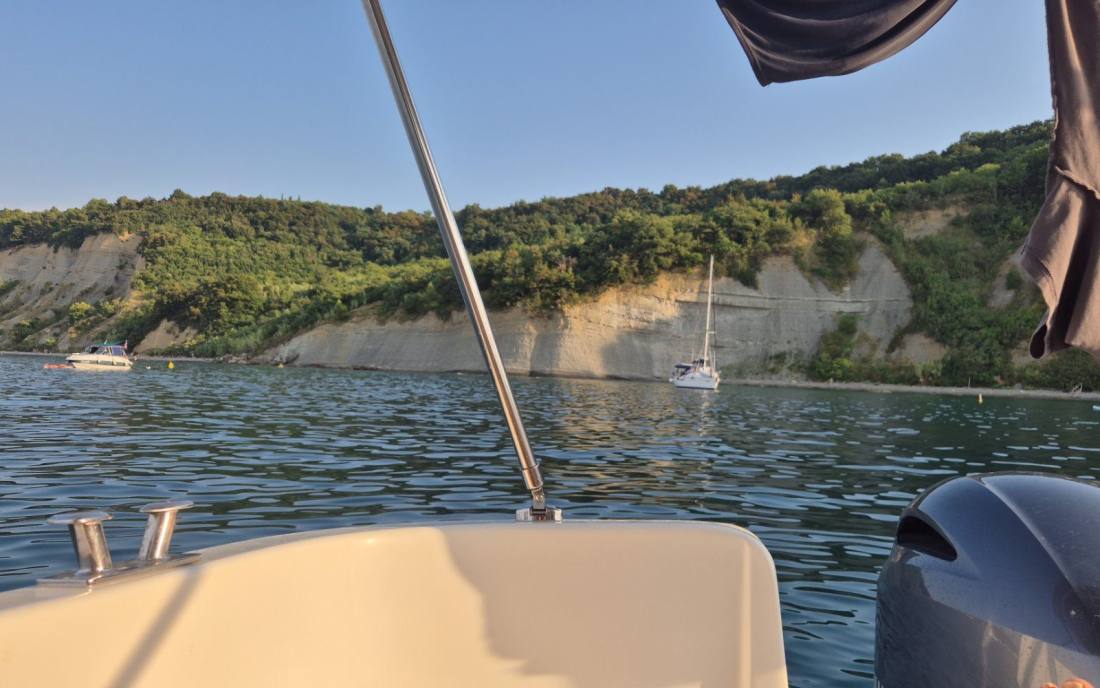
Geologists have a less romantic explanation. The coast here is built of flysch, layers of grey marl and sandstone that were laid down on the sea floor millions of years ago. Between them run thicker, lighter layers rich in limestone. Where the sea and the weather wear the cliff away, these pale layers stand out, and the stones that break off and roll onto the shore are light too. Seen from the water on a sunny day, the cliff and the shore below it really do look white, especially against the blue and green of the sea.
The cliff is still changing. Wind, rain and waves loosen pieces every winter, so the shape of the shore is never quite the same from one year to the next. It is also the reason to stay a little away from the foot of the cliff.
What the beach is like
- A natural pebble and stone shore, no sand.
- Very clear water, turquoise near the shore and deep blue further out.
- No lifeguards, no shop, no toilets and no shade except what the cliff gives in the late afternoon.
- Many visitors stack the flat stones into little towers, so you will often find the shore decorated with them.
- It is part of a protected area, so take everything you bring back with you.
How to get there on foot
The usual way is a forest path that starts near the Belvedere area above Izola and leads down to the shore, with steps at the end. Part of the path to the beach has been rebuilt in the traditional dry stone technique of the region. It is short but steep, so good shoes help, especially on the way back up in the heat. You can also walk along the shore from Izola, but only at low tide and with care on the rocks below the cliff.
The easy way: from the sea
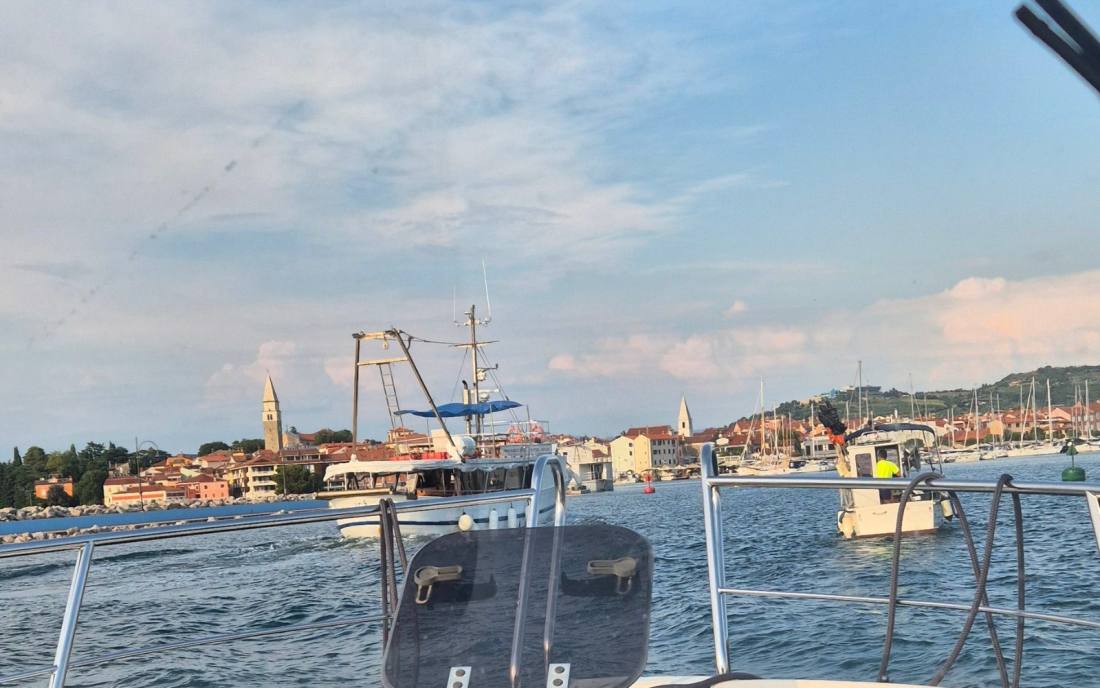
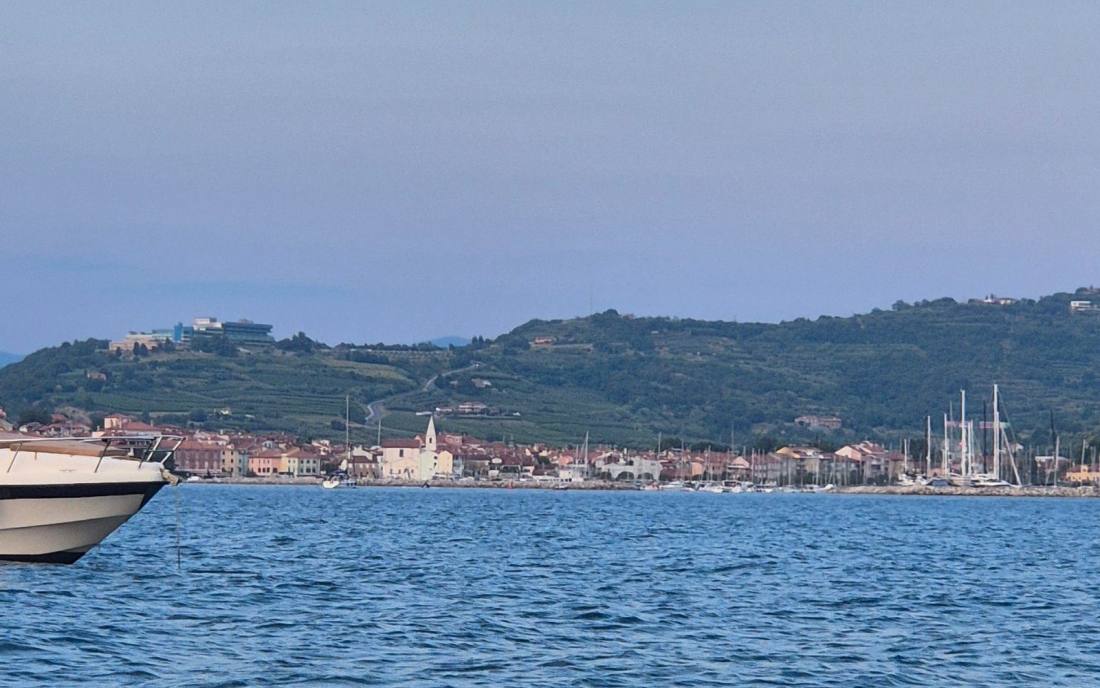
Bele Skale is only a few minutes by boat from the harbour in Izola, and this is how we visit it on our trips. We anchor in the bay below the cliff and you swim straight off the boat into deep, clean water. No steep path, nothing to carry, and you see the white cliff the way it looks best, from the sea.
Our shorter two-hour trip goes straight to Bele Skale for a swim, and on the longer trip to Piran we stop here on the way back. Swimming always depends on the weather and the sea, and it is always optional.
What to bring
- Water shoes, the stones are slippery and the bottom is rocky.
- Water and sun protection, there is no shade around midday.
- A mask, if you like to look at what is under the surface.
Whether you walk down or come by boat, go early or late in the day. The light on the white cliff is softest then, and the bay is at its quietest.
See it from the water
Private boat trips from Izola for up to five guests: Strunjan and Piran (3 hours) or a swim stop at Bele Skale (2 hours).
See tours and prices